
Pressing Herbal Tinctures: More Than a Final Step
Today, I would like to share a process that I have come to appreciate deeply, known as Intermittent Pressing. It has changed how I think about the herbal medicine making process as it has showed me how much valuable menstruum can be left behind when pressing the liquid from the marc is stopped too soon. In some cases, as much as 50% of the liquid extract can remain trapped within what we often assume is “spent” marc, material that is typically discarded to the compost bin.
For years, whether I was using my hands, a potato ricer, or a fruit press, I worked under the assumption that once resistance increased and the liquid menstruum ceased to flow with pressure, that this meant that the marc was spent and all of the valuable liquid extract had been extracted from the plant material. It seemed logical that when pressure no longer yielded liquid, there was nothing left to recover. However, I have now learned that this is not necessarily the case. When the pressed material is allowed to rest and then pressed again later, additional extract often emerges. The difference can be simply amazing!
By applying pressure gradually, releasing it, and returning to the material after a period of rest, more liquid can be expressed over time. This method improves yield, reduces waste, and results in a more thorough recovery of the extracted constituents. Perhaps even constituents that normally would not come out!
Before exploring this process further, it is helpful to understand what pressing a tincture actually involves. After plant material has macerated in alcohol or a hydro ethanol menstruum for a determined length of time, the liquid extract that now contains the desired soluble plant constituents must be separated from the solid plant matter, known as the marc. Pressing is the step where physical pressure is applied to the soaked plant material to express as much of that liquid menstruum as possible.
This can be done in a number of ways, from simply squeezing the marc by hand through a filter cloth, to using tools such as a potato ricer, tincture press, or fruit press. Regardless of the method, the goal remains the same. To recover the menstruum that has moved into and through the plant tissues during maceration carrying with it the extracted constituents that now transforms the maceration into the into the herbal medicine known as a tincture. Tinctures are also called alcohol extracts and hydro ethanol extracts.
What is often overlooked is that much of this liquid does not sit freely between the plant fibres. It is held within the structure of the plant material itself. This is where the method of pressing begins to matter more, especially with dense or tough plant material where the menstruum and extracted constituents can be more tightly retained within the plant structure at pressing time. Once resistance is reached and liquid flow slows, it is easy to assume the marc is spent. However, this is not always the case.
What is Intermittent Pressing
When plant material is pressed, it compresses and eventually resists further pressure. At that point, it can feel as though nothing more will be expressed. However, once the pressure is released, the compressed plant fibres slowly relax. This relaxation allows the internal structure of the plant material to shift and slightly decompress, reducing resistance within the marc.
During pressing, liquid within the plant cells and tissues moves toward areas of lower resistance, but this redistribution takes time. When the material is allowed to rest between pressings, the remaining liquid continues to migrate toward the surface. With each subsequent round of pressure, more of that redistributed liquid becomes available for extraction. Intermittent pressing works not because more force is applied, but because time is given for the plant matrix to reorganize and release what it still holds.
Elecampane Root Tincture: A Case Study in Retention and Release
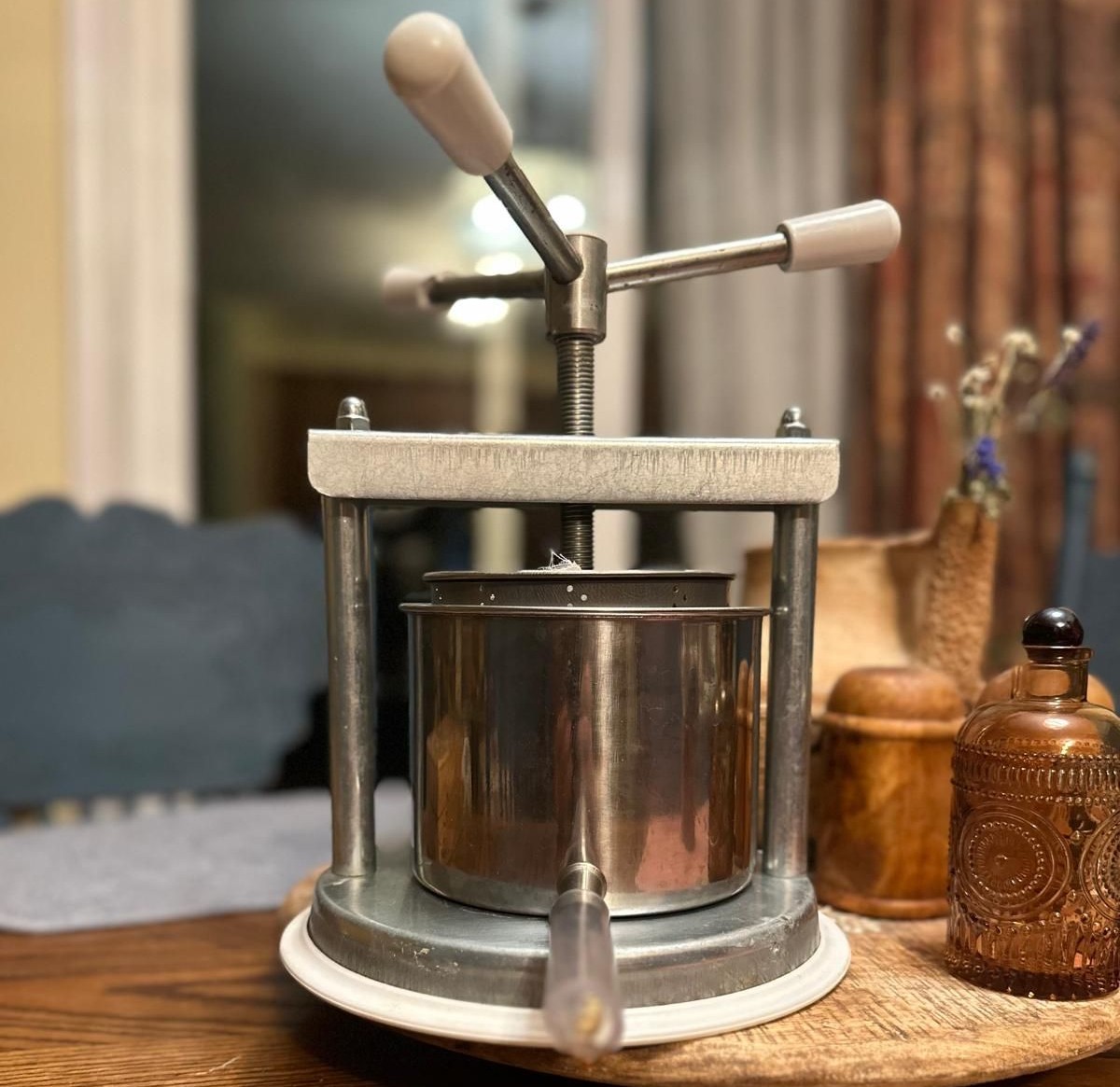
To demonstrate intermittent pressing, I will explain how I pressed a hydro ethanol maceration of Elecampane, Inula helenium. I used fresh Elecampane root macerated in a hydro ethanol menstruum at a 1:2 ratio, 500 ml menstruum to 250 gr of plant material. When it was time to press the tincture, I used a fruit press lined with cheesecloth. I initially recovered 175 ml of liquid before reaching firm resistance, at which point no further flow of liquid occurred. Usually, I would rest very briefly and try again. However, this time, I chose to continue using an intermittent pressing approach.
After shifting to intermittent pressing and allowing the marc to sufficiently rest between rounds, typically for about ten minutes at a time, I was able to recover an additional 300 ml over the next hour through staged pressing. With each cycle of rest and pressure, more liquid became available. Several hours later, I returned to the press, fully expecting nothing more to emerge, yet I was able to extract nearly 60 ml of additional liquid. I left the marc in the press overnight and by morning, I recovered another similar amount. In total, I extracted over 50 percent more liquid than I initially believed was possible. This was liquid that would otherwise have been discarded with what I once considered spent marc.
It is important to note that results will vary depending on the plant material and whether it begins fresh or dried. In this case, I was working with freshly harvested Elecampane root, dense with moisture and naturally abundant in extractable liquid. A fresh, juicy root behaves very differently under pressure than a dried, reconstituted marc.
The difference here was not greater force, but time and patience. Intermittent pressing simply allowed the plant matrix to relax, redistribute, and release what it still held.
For those concerned about exposure to air and potential oxidation during intermittent pressing, the risk is minimal over the time frames involved. As a simple precaution, I transferred the expressed liquid extract to an amber bottle and capped it between pressings.
There is also little cause for concern regarding the plant material remaining in the press during the rest periods, even the longer ones such as overnight. The marc is protected from significant air exposure inside the cloth and stainless steel basket, with pressure still applied by the press plate. This limits air exposure and helps maintain the integrity of the marc and menstruum during the process.
This staged pressing method can be applied to any herbal preparation that requires expression, including infused oils. Provided the liquid itself is stable and appropriate for extended intermittent pressing, the technique can significantly improve recovery and overall yield.
A Shift in Constituents
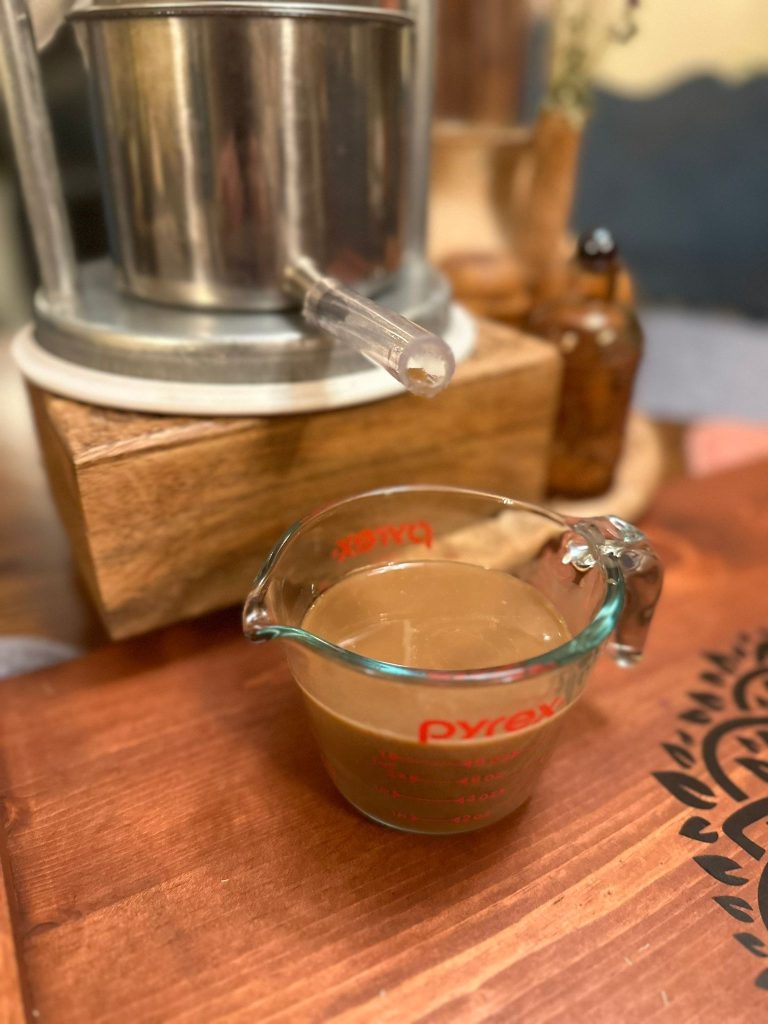
When pressing Elecampane root, the first few pressings yielded a milky caramel coloured liquid, thick and opaque, clearly rich in inulin and other water soluble polysaccharides. There was a softness to it, almost creamy in appearance, reflecting the abundance of these larger carbohydrate constituents, which are readily released with gentle pressure and easily drawn into the water portion of the hydro ethanol menstruum.
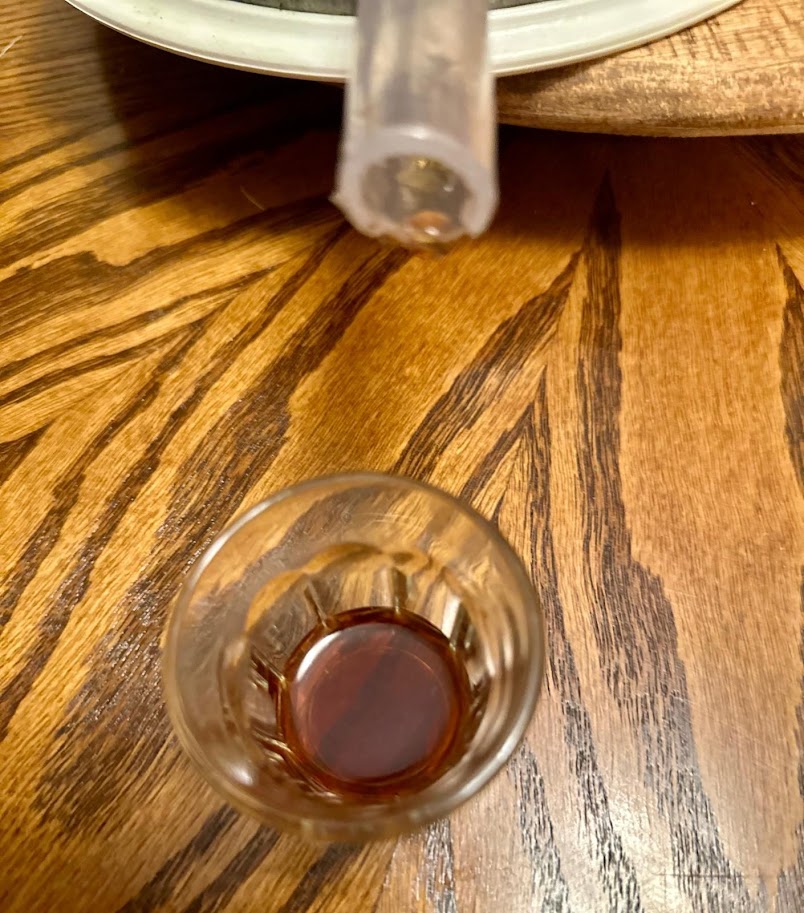
After multiple pressings, the liquid shifted dramatically. What remained was clear and amber brown, lighter in texture and more translucent. It told a different story, one shaped less by polysaccharides and more by alcohol soluble constituents such as sesquiterpene lactones, aromatic compounds, and resins. The change in colour and clarity revealed a shift in dominant phytochemical expression.
Observations Across Plant Types
Following this experience, I continued to explore intermittent pressing across a range of plant materials, including fresh and dried roots as well as fresh and dried aerial parts of plants. The results were not uniform.
Fresh roots have yielded the most significant increase in recovered liquid using the intermittent pressing method. The difference has been substantial and continued over extended periods of rest and repeated pressing. I believe this is likely influenced by both the high water content and the structure of fresh roots, which appear to retain fluid within their matrix.
There may also be a role for the types of constituents commonly found in roots. Many contain polysaccharides such as starches, mucilage, and inulin, which are more “juicy” in nature. It is possible that certain roots, such as Elecampane, possess more of a moisture retentive matrix, which may further explain the extended yield observed.
The initial pressings likely reflected the most accessible and readily soluble constituents, such as the water soluble polysaccharides. Subsequent pressings appeared to draw from more tightly retained constituents within the plant matrix, resulting in a shift toward more alcohol soluble constituents. This raises the question of whether continued pressing allows compounds that are less readily extracted within the solubility spectrum to be carried out as the internal environment shifts and fluid redistributes. If so, it suggests that extraction may not be governed by polarity alone, but also by the physical distribution and movement of fluid within the plant tissues under pressure.
Early pressings reflect what is most soluble and accessible, whereas later pressings reflect what is more tightly retained within the plant matrix. While solubility remains a primary factor in extraction, technique may influence how completely the available constituents are extracted, especially when working with fresh roots.
Solubility and polarity determine what can be extracted, while technique influences how completely those constituents are recovered, including phytochemicals that are less readily soluble or more tightly retained within the plant matrix.
Dried plant roots behaved quite differently. While intermittent pressing did yield some additional liquid, the increase was by far less pronounced. In most cases, one to three rest cycles after initial resistance were sufficient, with only minimal additional yield. These observations suggest that the higher water content in fresh roots may play a more significant role, in addition to the types of phytochemicals present.
Fresh aerial parts showed mixed and moderate results. Some additional liquid could be recovered with intermittent pressing, but not to the same degree as with roots. Dried aerial parts yielded very little beyond the initial pressing, suggesting that both moisture content and plant structure play a significant role in how much liquid remains trapped within the marc.
Final Reflections
What became clear through these observations is that intermittent pressing is not a one size fits all method. Its effectiveness appears to depend on the nature of the plant material, including its water content, density, and cellular structure. Even so, the use of a press itself consistently yielded more liquid than manual expression, with intermittent pressing enhancing this effect depending on the plant type, plant part, and whether the material was fresh or dried.
I hope these observations offer something useful in your own practice and encourage a bit of experimentation.
Happy Herbal Medicine Making!
Leave a Reply